

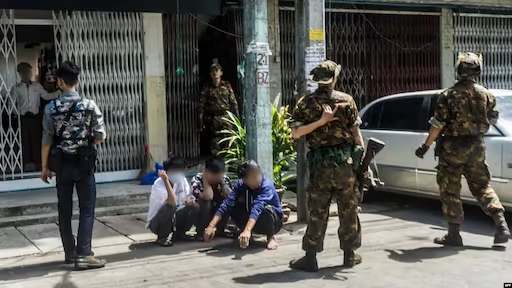
Missing person reports in Myanmar have risen sharply since the military government activated the country’s conscription law in February 2024, with evidence suggesting that arrests, coercion and unannounced detentions have been used to recruit people into military service, according to a report released on Monday by Myanmar Witness.
The report said Myanmar’s military enacted the People’s Military Service Law on February 10, 2024, to replenish its ranks as fighting intensified across the country.
While the law authorizes the compulsory enlistment of eligible men and women, Myanmar Witness said recruitment has frequently involved arrests, intimidation, coercion and enforced disappearances rather than formal call-up procedures.
Researchers analyzed 477 missing person notices posted on Facebook between January 2021 and January 2025, focusing on notices published each January to compare year-on-year trends.
The number of missing person notices increased from four in January 2021 to 82 in January 2025, according to the report.
Yangon Region recorded the highest number of reported disappearances with 163 cases, followed by Mandalay Region with 48 and Shan State with 35. Most cases were reported in areas under military control.
The report found that the majority of those reported missing were men and boys of conscription age, a pattern it said aligns with the age groups targeted under the military service law.
Myanmar Witness also reported that about 3,313 Myanmar nationals were deported from neighboring countries between February 2024 and May 2025.
Of those, about 84.4% were deported from Thailand, with more than 2,500 people handed over to Myanmar authorities.
The report documented cases in which some deportees from Thailand’s Ranong province were transferred directly to military units for training instead of being allowed to return to their families.
It also cited cases where people initially reported missing were later located at military detention facilities or training centers after allegedly being forcibly recruited into military service.
Myanmar Witness said the available evidence suggests that deportations from neighboring countries have also been used as a pathway for forced military recruitment.
The organization said the sharp increase in missing person reports, the disproportionate impact on men of military age and documented cases involving detention, coercion and deportation indicate a broader pattern of forced recruitment following the implementation of the conscription law.
The report said missing person notices could serve as an indicator of the humanitarian impact of forced recruitment on civilians.
However, Myanmar Witness cautioned that not every missing person case could be directly linked to forced conscription. It said its findings identify patterns and documented cases that suggest a possible connection rather than establishing a direct link in every reported disappearance.